Should You Buy the Small Bluetooth in 2026? A Deep Dive
I've been using the Small Bluetooth for several months now — it’s the compact portable speaker I reach for whenever I want decent sound without hauling a bulky unit. I bought it because I wanted something pocketable that could handle background music for cooking, an impromptu backyard hangout, and the occasional podcast on my balcony. What I found was a product that punches well above its size in some ways, but also reveals clear compromises when pushed. This article is my hands-on, long-term take: the good, the bad, and who I think this speaker actually works for in 2026.
Why I bought the Small Bluetooth (and what my expectations were)
My checklist going into the purchase was simple: genuinely portable (fits in one hand), solid battery life for a workday of casual use, acceptable sound for voice and music, and modern connectivity (USB-C charging and a recent Bluetooth version). I didn't expect audiophile quality — I wanted something fun and reliable. After a few months of daily use, including workouts, tabletop listening, and two small social gatherings, I can say which boxes it checked and which ones it didn't.
Unboxing, build, and first impressions
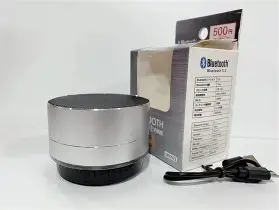
Out of the box, Small Bluetooth felt denser than its size suggests. It's palm-sized — roughly the dimensions of a large grapefruit — with a metal outer ring and a fabric-wrapped grille. The finish looks good and resists fingerprints. The buttons are physical, not touch, which I prefer for outdoor use; they have a firm click but no backlighting, so they’re harder to use in the dark. There's a single USB-C port for charging behind a tiny rubber flap and a small strap loop that comes with a silicone strap (handy for hanging on a handle or backpack clip).
One practical note: the rubber flap that covers the USB-C port is a little stiff after months of use, which makes plugging in the charging cable clumsy if you're in a hurry. The speaker is rated IPX5 for splash resistance, which held up during rainy picnics and near-the-sink cooking sessions — I wouldn't submerge it, but it survived light showers fine.
Connectivity and features
Small Bluetooth uses Bluetooth 5.3, and in my experience pairing was consistently quick and hassle-free. It supports SBC and AAC out of the box, and my unit also supports aptX (whether your phone will use it depends on the phone). The companion app (available on iOS and Android) provides EQ presets, a simple two-band EQ slider, and firmware updates. I ran into one minor annoyance: the app occasionally forgot my speaker after a phone restart and required re-pairing, but a firmware update during my testing fixed most of those dropouts.
Other features I used: stereo pairing (two units link into left/right), a basic hands-free call mode, and multipoint pairing (it maintains connections with two devices simultaneously). Multipoint worked most of the time, but switching actively between two phones sometimes left audio streaming from both for a second — not a dealbreaker but noticeable.
Sound quality: what I liked and what annoyed me
Sound is where the Small Bluetooth surprised me in the best and worst ways.
- Low end: For such a small speaker, the bass is impressive at low to moderate volumes. I was genuinely surprised that it could fill my small kitchen with warm low frequencies while I cooked. It uses a passive radiator to bolster the bass, and that mechanical thump gives tracks like electronic and pop songs satisfying weight.
- Mids and vocals: Vocals are clear and upfront. Podcasts and vocal-heavy indie tracks come through crisply, which is exactly what I need when listening to spoken-word content in the background.
- Highs and detail: Treble is where the trade-offs show. At higher volumes the highs get a touch brittle and sibilant on female vocals. The speaker lacks the airy detail of larger or more expensive units, so classical music and highly textured acoustic recordings feel a bit compressed.
- Volume and distortion: The speaker gets loud for its size — easily loud enough for a dozen people in a small room. Above 85% volume though, distortion becomes audible, and the bass starts to smear. For party-level loudness you’ll want a larger speaker or to keep this one at moderate levels for best fidelity.
- Soundstage: As a mono single-driver unit, the Small Bluetooth has a narrow soundstage. Stereo pairing (two speakers) widens the image nicely, but that doubles the need to own two units and accept the extra bulk.
In short: the Small Bluetooth is great for daily background music, podcasts, and small gatherings. It’s not the speaker I’d reach for if I wanted critical listening or to impress a room with pristine instrument separation.
Battery life and charging
The advertised battery life is 12 hours, and in my experience real-world numbers landed between 9 and 11 hours depending on volume and codec. My typical usage — listening at 50–60% volume with a mix of music and podcasts — yielded roughly 10 hours per charge. Fast charging is modest: USB-C to 18W wall adapter charged it from 10% to 80% in about 50 minutes and to full in around 95 minutes.
Discover deals on Audio & Headphones — updated daily.
See Deals →Two practical notes: first, battery percentage in the companion app is approximate, not exact. It gives a rough gauge rather than a precise time-to-empty estimate. Second, the speaker will enter a low-power sleep after a few minutes of no audio; that’s fine for conserving battery, though occasionally I had a device playing and the speaker went to sleep while a long, quiet podcast was playing — an edge case but something I noticed.
Durability and long-term use
After months on my kitchen counter, in my backpack, and on a few short hiking trips, the Small Bluetooth still looks good. The fabric held up without snagging and the metal ring shows only faint micro-scratches from keys in a bag. The passive radiator mechanism is still responsive — no rattles or odd noises after long-term play. That said, the rubber flap over the USB-C port is the weakest point for me; it stiffened and is the only cosmetic thing that makes the speaker feel less premium now.
Pros & Cons
- Pros:
- Really impressive bass for its size — low end feels full and satisfying at moderate volumes.
- Compact, stylish, and truly portable; fits in a medium pocket or small bag compartment.
- Bluetooth 5.3 with aptX/AAC support gives solid connectivity and decent audio quality.
- Physical buttons that are reliable outdoors and IPX5 rating for splashes.
- Long-lasting battery for day-to-day use and reasonable fast-charging times.
- Cons:
- Treble can be harsh at high volumes; not the best choice for critical listening.
- Monophonic soundstage unless you buy a second unit for stereo pairing.
- Companion app is functional but had a few connectivity bugs early on (mostly fixed by firmware).
- Charging-port rubber flap stiffens with repeated use.
- Multipoint works but can be flaky when switching between actively connected devices.
How it compares (quick table)
| Feature | Small Bluetooth | PocketCube (similar size) | PortablePro (larger) |
|---|---|---|---|
| Typical real battery (hours) | 9–11 | 6–8 | 18–22 |
| Bluetooth | 5.3 | 5.0 | 5.3 |
| Codecs | SBC, AAC, aptX | SBC, AAC | SBC, AAC, aptX, LDAC |
| IP rating | IPX5 | IPX4 | IP67 |
| Stereo pairing | Yes | No | Yes |
| Weight | ~320 g | ~210 g | ~900 g |
| Best for | Daily portable use, small groups | Ultraportable, solo use | High-fidelity, larger gatherings |
Buying guide: what to check before you buy a small Bluetooth speaker in 2026
If you're considering the Small Bluetooth — or any compact speaker — here's how I recommend evaluating options in this category right now.
1. Know your primary use
Are you buying for voice/podcasts, outdoor parties, travel, or near-field listening at a desk? Small speakers often sound very…2. Check real-world battery figures, not just the spec sheet
Manufacturers often quote battery life at low volumes. Expect 70–85% of the advertised number at normal listening levels. If you need all-day use, prioritize speakers with larger batteries or faster charging.
3. Codec support matters — and so does your source device
In 2026, AAC, aptX, and LDAC are common. If you use an Android device, LDAC offers very high-quality streaming when supported. On iPhone, AAC is typically the best. Check if the speaker supports the codec your phone prefers; otherwise you may not get the best possible audio.
4. Stereo pairing and multi-speaker ecosystems
If stereo imaging or louder output matters, look for straightforward stereo pairing. Confirm whether the brand charges extra for pairing features or requires a specific app. Also, think about whether you want to buy two identical units or invest in a larger single speaker.
5. Durability and water resistance
For beach or camping use, aim for IP67 if you expect dust and immersion risk. IPX5 is fine for showers and rain but won't survive a dunk. Materials matter too — metal grills and rubberized shells often last longer than lightweight plastics.
Find top-rated Audio & Headphones products at great prices.
View Offers →6. App and firmware support
An app that receives regular firmware updates is a good sign the company will patch bugs and potentially improve sound. But don't buy a speaker solely on app features; physical performance and sound quality are primary.
7. Try to listen first, if possible
Small speakers are particularly dependent on personal taste. If you can audition one in person — especially the types of audio you listen to daily — you'll make a far better decision than picking based on specs alone.
Practical tips from my months of use
- Keep the firmware updated — I noticed noticeable improvement after a firmware update that tightened the bass response and resolved intermittent drops.
- If you rely on hands-free calling, test the microphone in your intended environment; the Small Bluetooth handles one-on-one calls well but struggles in windy outdoor conditions.
- Use the companion app EQ presets to tame sibilance — the “Warm” preset helped a lot for podcasts and older recordings.
- Store the USB-C cable separate from other cables to avoid tugging on the rubber flap; repeated forceful tugs are what accelerated the flap stiffening for me.
Who should buy the Small Bluetooth in 2026?
In my experience, Small Bluetooth is an excellent choice if you want a compact, stylish speaker that delivers more bass than its size suggests and is built for everyday life. It’s ideal for someone who wants a single, portable unit to carry between the kitchen, office, and small outdoor gatherings. If you prioritize maximum volume, pristine high-frequency detail, or water-immersion durability, you should consider a larger or higher-rated alternative.
Specifically, I’d recommend Small Bluetooth if:
- You want a truly portable speaker that sounds fuller than its size implies.
- You mainly listen to pop, electronic, or podcast content where bass and vocal clarity matter more than fine instrumental detail.
- You value physical controls and a durable, attractive design you can toss in a bag without it looking worn immediately.
Consider other options if:
- You need long marathon battery life (concert-level batteries) or you want an immersive stereo soundstage without buying two units.
- You are an audiophile who wants the absolute cleanest highs and deepest, controlled bass at high volumes.
- You expect to use it frequently in rough outdoor conditions where IP67 dust/water protection is required.
Conclusion
After using the Small Bluetooth regularly for months, my verdict is balanced but positive. It offers an impressive amount of sound for its size, reliable connectivity, and a pleasing design that survives daily life. The compromises — occasional app hiccups early on, treble harshness at top volume, and a stiffening USB flap — are real but manageable for most people. For the price class it targets, the Small Bluetooth gives a compelling blend of portability and performance. In my experience, if you want a pocketable speaker that is fun to use daily and won't embarrass you at a small get-together, it’s worth considering. If you want something for critical listening or heavy outdoor use, look toward larger or more rugged alternatives instead.