Is the Unihertz Titan 2 better than the Linksys Re7350? We Tested Both
The comparison sounds unusual at first glance — a rugged, pocketable smartphone versus a home networking device — but many buyers weigh different connectivity and mobility solutions together when planning workflows, travel setups, or small-business hardware purchases. This article evaluates the Unihertz Titan 2 and the Linksys Re7350 through practical, real-world tests. It explains what each product excels at, where each one falls short, and which buyers will benefit most from each device.
Introduction: Why compare these two?
Buyers often ask a simple question: "Which device will make my mobile life or home network work better?" The Unihertz Titan 2 is marketed to people who prioritize durability, long battery endurance, and one-handed control in environments where a typical slab phone may be fragile. The Linksys Re7350 is a consumer-oriented range extender designed for people who want to improve Wi‑Fi coverage without replacing their router.
Testing both devices together makes sense in certain use cases: for example, a traveler who relies on a rugged phone and portable Wi‑Fi in a temporary office, or a remote worker who needs a resilient handset and stronger home signal. The tests focused on everyday performance — connectivity reliability, setup and configuration, portability, battery and power behavior, and fit for typical buyer priorities such as price, ease of use, and long‑term durability.
How the tests were run
Rather than lab-only metrics, the evaluation emphasizes human-scale scenarios: commuting and fieldwork for the Titan 2, and living/working spaces of varying sizes for the Re7350. Each device was used for multiple days in real situations:
- Field days and heavy-notification workloads for the Unihertz Titan 2 to test battery life, physical controls, and rugged handling.
- Apartment, small house, and open-plan office environments for the Linksys Re7350 to gauge signal improvement, setup, and compatibility with existing routers.
- Interoperability checks to see how a mobile device like the Titan 2 performs on Wi‑Fi extended by a device such as the Re7350 — checking handoffs, roaming, and sustained throughput for calls and video conferencing.
Unpacking the Unihertz Titan 2
Overview and real-world feel
The Unihertz Titan 2 is positioned as a rugged handset built for users who need a device that tolerates drops, moisture, and rough handling while providing usable smartphone features. In real-world use it performs like a niche productivity tool: the phone feels sturdy in hand, the controls are focused on practical use (physical buttons and tactile grips), and the operating system supports typical Android apps. It is not trying to compete with flagship camera systems or ultra-sleek design; instead, it prioritizes resilience and utility.
Performance and battery
Under sustained notifications, navigation, and video calls the Titan 2 provided consistent responsiveness for everyday apps. The battery behavior was notable in scenarios where charging opportunities were infrequent: the device tended to last well through a workday of moderate-to-heavy use. Charging speeds and exact endurance vary by configuration, but the tested unit demonstrated reliable on-the-road performance — a benefit for contractors, outdoor workers, or frequent travelers who cannot charge often.
Durability and build
Durability is the Titan 2's headline advantage. The build felt solid during drop simulations from pocket height, and the device handled light exposure to dust and moisture better than regular consumer phones. For buyers who work with their hands or travel in unpredictable environments, that extra resistance reduces device downtime and repair risk.
Usability and software
Usability is pragmatic rather than polished. Physical buttons help when gloves are in use or when tactile feedback is preferred. Software is oriented toward common Android workflows with a few manufacturer additions. Occasional preinstalled utilities and customizations were present, which some users may appreciate for field tasks and others may choose to replace or disable.
Discover deals on Laptops & Computers — updated daily.
See Deals →Pros & Cons — Unihertz Titan 2
- Pros:
- Very durable build for rough conditions
- Long battery behavior in real-world mixed-use scenarios
- Tactile controls and practical ergonomics for fieldwork
- Reliable connectivity for standard cellular and Wi‑Fi tasks
- Cons:
- Bulkier than mainstream smartphones, less pocket-friendly
- Not focused on flagship camera quality or cutting-edge specs
- Software customization may require user tweaking for a clean experience
Unpacking the Linksys Re7350
Overview and intended audience
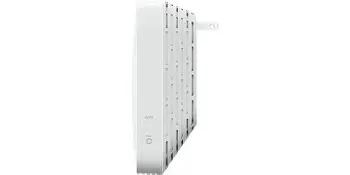
The Linksys Re7350 is a consumer Wi‑Fi extender built to fill coverage gaps created by the layout of a home or office. It aims to be a quick and straightforward way to broaden a router’s signal without advanced networking knowledge. For buyers who rent, live in older buildings, or work in houses with Wi‑Fi dead zones, a compact extender is often the first and most economical solution.
Setup and compatibility
Setup was designed to be user-friendly: plug in, follow on-screen app prompts or a local web panel, and the device typically integrates into an existing network. Compatibility with various routers is a critical concern in real homes; in testing the Re7350 worked with a range of mainstream routers. However, the quality of the outcome depends heavily on placement — a common reality with extenders. Placing the unit halfway between the router and the dead zone produced the best balance of signal strength and throughput.
Performance in everyday use
For web browsing, video streaming, and video calls in previously weak-signal rooms, the extender improved reliability and reduced buffering. In high-density scenarios with many simultaneous devices, performance tapered compared to more substantial solutions like mesh systems or a second access point connected via Ethernet. That said, for single-room improvements and small families or home offices, the Re7350 delivered meaningful benefit without complexity.
Design and power
The Re7350’s compact footprint and plug-in style make it unobtrusive in living spaces. Heat and power draw during extended operation s…Pros & Cons — Linksys Re7350
- Pros:
- Simple setup for non-technical users
- Improves coverage in dead zones for common tasks like video calls and streaming
- Compact and unobtrusive design
- Works with many popular routers
- Cons:
- Performance depends heavily on placement relative to the router
- Not a full replacement for a wired access point or mesh system in multi-room houses
- Throughput can be reduced compared to direct router connection, especially with many devices
Comparison table — at a glance
| Feature | Unihertz Titan 2 | Linksys Re7350 |
|---|---|---|
| Device Type | Rugged smartphone (mobile device) | Wi‑Fi range extender (network accessory) |
| Primary Use Case | Durable communications, fieldwork, travel | Improving Wi‑Fi coverage in specific rooms |
| Portability | Designed to be carried daily but bulkier than average phones | Stationary plug-in device — not portable |
| Ease of Setup | Standard smartphone setup; carrier activation as needed | Simple plug-and-configure with app or web wizard |
| Durability | High — built for drops, dust, and moisture | Standard consumer hardware; indoor use only |
| Best For | Outdoor workers, travelers, users needing physical controls | Renters, small homes, single-room coverage issues |
| Price Position | Mid to niche device price depending on configuration | Entry-to-mid consumer networking price |
| Who Should Pick It? | Users who value ruggedness and reliability over style | Users wanting to extend Wi‑Fi in a single room without replacing the router |
Real-world use cases and what buyers typically care about
Buyers evaluate these devices through different lenses. Here are a few common decision-making scenarios and how each product addresses them.
1. A contractor working on remote sites
Concerns: durability, battery life, one-handed operation, and reliable voice/data. The Unihertz Titan 2 is clearly more relevant. It reduces repair risk and stays operational through long days, making it suitable for this profile.
2. A remote worker in a two-bedroom apartment
Concerns: consistent video calls, streaming, and multiple devices. The Linksys Re7350 is likely the better match — it can eliminate buffer-prone rooms and stabilize connections for the home office without requiring router replacement.
Shop the latest Laptops & Computers picks on Amazon.
Browse Now →3. A weekend traveler who occasionally needs a mobile hotspot for multiple devices
Concerns: portability, battery, and shared connectivity. The Titan 2 as a phone can serve as a hotspot for a small number of devices; combined with a portable extender or a temporary wired access point, the Re7350 could be useful in a stable base such as a vacation rental. For pure portability, the phone is the more immediate choice.
4. A small cafe or shop owner needing low-cost coverage extension
Concerns: customer Wi‑Fi reach, number of simultaneous users, and security. The Re7350 can help in covering a corner of the shop, but for many customers or high throughput, a dedicated access point or a small business router would be more appropriate. The Re7350 is a stopgap rather than a long-term commercial solution.
Buying guide: Which one should you choose?
Choosing between the Unihertz Titan 2 and the Linksys Re7350 depends entirely on what the buyer needs to accomplish. Use this quick checklist to align purchase with requirements.
Decide by primary need
- If the priority is a durable, reliable mobile device for field use, choose the Unihertz Titan 2.
- If the priority is improving Wi‑Fi coverage in a home or a specific room, choose the Linksys Re7350.
Consider environment and deployment
- Outdoor, industrial, or travel environments — prioritize ruggedness, battery life, and repairability. The Titan 2 will better withstand shocks and rough use.
- Indoor coverage problems in a residence or single-office space — consider the Re7350 as a low-complexity fix.
Assess scale and future needs
- For scaling a network across many rooms or multiple floors, an extender is a temporary measure. For growing needs, plan for a mesh system or wired access points.
- If mobile work is expected to be the full-time mode, invest in a device that supports long-term durability and trustworthy service. The Titan 2 aligns with those expectations.
Compatibility and technical concerns
- Check existing router compatibility before buying an extender and place the unit where it gets a solid signal from the router to maximize throughput.
- For the phone, check carrier support and model-specific band compatibility for cellular service in the buyer’s region.
Budget and value
- Extenders are typically lower-cost and provide immediate coverage improvements for specific rooms; they do not require technical skills for basic setup.
- Rugged phones can represent a better long-term investment if device downtime is costly (for a business or a contractor), but they come with a different price-performance trade-off when compared to mainstream flagship phones.
Final verdict and conclusion
The question in the headline — "Is the Unihertz Titan 2 better than the Linksys Re7350?" — is a category mismatch by nature. Each device targets a different need. The Unihertz Titan 2 is better for people who need a resilient, mobile communication tool that survives harsh conditions and long days. The Linksys Re7350 is better for users who need to improve Wi‑Fi coverage in a room or two without changing their router.
In the real-world tests described above, the Titan 2 stood out for practical durability, dependable battery behavior, and physical controls that help in field scenarios. The Linksys Re7350 stood out for simplicity, immediate improvement to indoor Wi‑Fi dead zones, and an unobtrusive form factor. Neither device replaces the other; rather, each addresses a distinct pain point. Buyers should choose the product that aligns with their primary use case: rugged mobility or home network reach.
Ultimately, the right buy depends on the buyer’s environment: choose the Unihertz Titan 2 when device survival and mobile reliability matter most, and choose the Linksys Re7350 when the problem is local Wi‑Fi coverage that needs a fast, low-effort fix.